


At Haberdashers’ Adams the Upper Sixth complete an Extended Project Qualification (EPQ). The EPQ is equivalent to half an A-level and is worth up to 28 UCAS points.
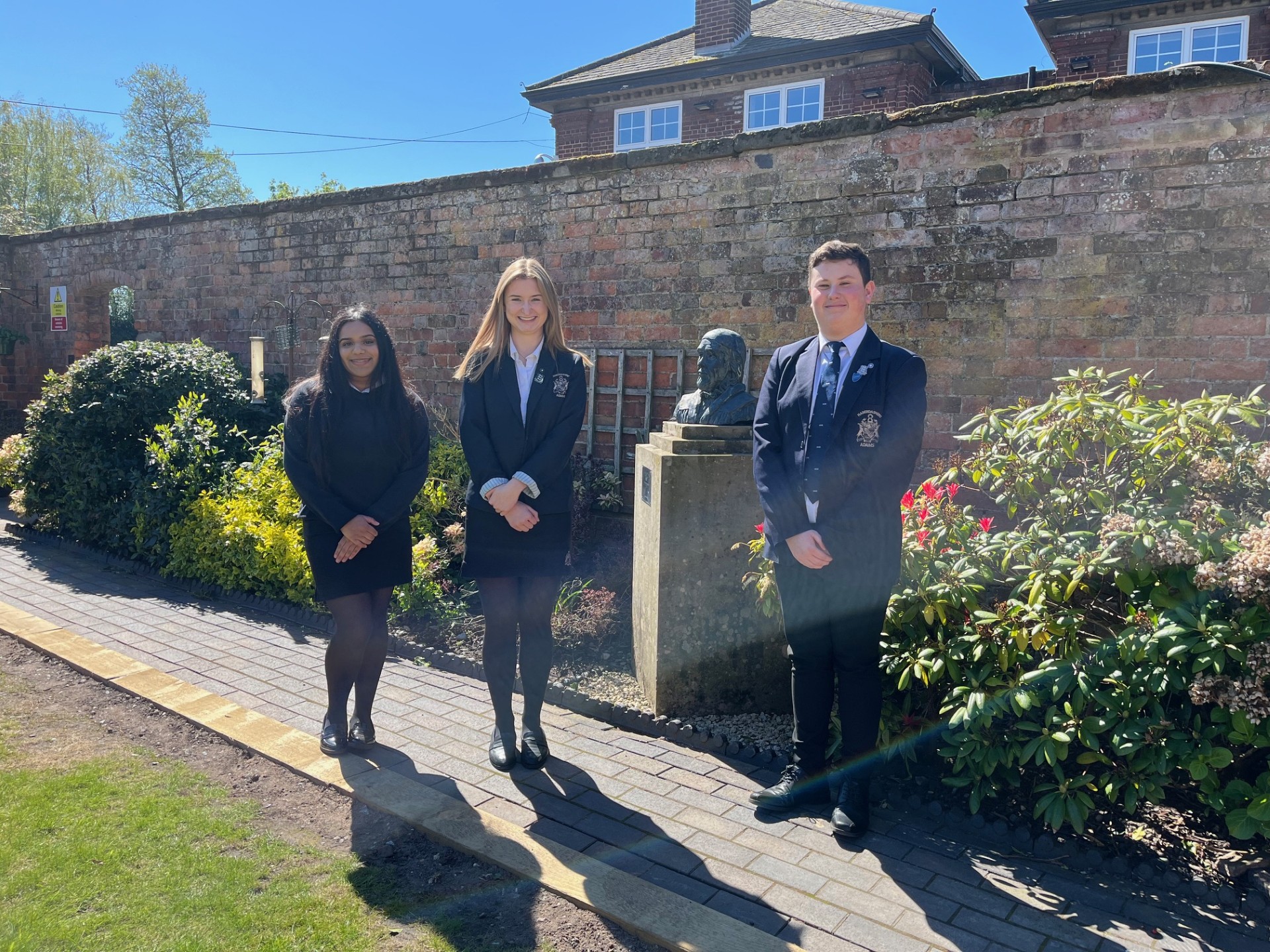
The student-led, independent piece of research, culminates in a 5,000-word essay and 10-minute presentation. It is highly regarded by universities and is great preparation for life beyond school, be that at university or in the workplace. Two students share their thoughts on the EPQ:
Joss Clode
My Extended Project Qualification (EPQ) is on how far the culture of the UK was affected as a response to the expansion of the EU in 2004 and the migration it caused as a result. I chose this subject because I’m currently studying Government and Politics and am planning on studying Politics and International Relations at University. Researching more about this topic has made me more confident that this is the path I want to choose. I also studied Sociology as my AS level last year, so my EPQ combined both these subjects and was therefore very interesting for me whilst researching and presenting.
Undertaking and EPQ has developed my research skills, including referencing and creating a bibliography. I have also learned how to structure and write a long essay. Finally, I have also improved my time management skills as I had to consider other deadlines and work whilst working on this project. My confidence has grown and I can now comfortably present in front of people and respond to questions easily, as well as feeling more specialised in a specific area.
Sasha Donaghue
My EPQ concerned propaganda, and its adaptation to the digital age. This interesting topic spanned traditional techniques, alongside their evolution into contemporary techniques, specifically deep fakes, artificial intelligence, and algorithmic manipulation. Other key points included the difference between political and economic propaganda, and how these have impacted different periods.
I became interested in this topic through experiencing its effects - its influences on both the right and left wings. Propaganda’s polarising effects have helped certain people stay in power through a political ‘divide and rule’ strategy that helps a state control a population that could collectively oppose a government's rule. My hope in studying this topic was to improve my own media literacy, and thereby understand the ways public manipulation is becoming increasingly subtle. This knowledge, and being able to think more for myself, will be beneficial both for my upcoming work experience with Reuters, and my future aspirations as a journalist.
Through the EPQ process, I have learned a lot about my chosen topic, which has boosted my independent research skills. Furthermore, it has been very useful in gaining key skills in my transition to university, for example referencing, assessing source reliability, and conducting interviews in order to gain information.